 Post Reply
1-20 of 20
Post Reply
1-20 of 20
Bruder. Cyclical stock. During the good times in 2020 all of the med stocks were trading at forward PE of less than 5x. That?s how valuation changes overtime. Cheers.
My goodness ? this one nobody notice ? Half year profit already USD 0.2087 !!! If maintain this earning full year PE less than 2 ??
20% drop in last few days... What happened?
PQTPQK ( Date: 25-May-2022 10:41) Posted:
what happen ?
ysh2006 ( Date: 25-May-2022 05:17) Posted:
| This KGI broker it analyst don't know accurate or not...half year past already !! Where is the target can achieve |
|
|
|
what happen ?
ysh2006 ( Date: 25-May-2022 05:17) Posted:
This KGI broker it analyst don't know accurate or not...half year past already !! Where is the target can achieve?
ccakg88 ( Date: 03-Sep-2021 15:51) Posted:
https://www.theedgesingapore.com/capital/brokers-calls/kgi-raises-uni-asias-tp-156-following-strong-1h21-results
KGI raises Uni-Asia' s TP to $1.56 following strong 1H21 results
Amala Balakrishner Published on Tue, Aug 17, 2021 / 4:54 PM GMT+8
Uni-Asia is maintaining its &lsquo outperform&rsquo call on Uni-Asia at a higher target price of $1.56. This is up 14 cents from its previous $1.42 cent call and is expected to give the counter a 47% upside from it $1.09 price, analyst Joel Ng writes in an Aug 17 note.
&ldquo Valuations are attractive amid the stronger-than expected bulk carrier upcycle. Our target price implies a 0.7x FY2021 P/B (price-to-book), which is still a conservative 30% discount to international peers who are trading above 1.0x P/B,&rdquo he explains.
Ng&rsquo s move follows the &ndash in his words &ndash higher and stronger profits of US$7.0 million ($9.5 million) in 1HFY21, a reversal from the $3.9 million loss seen in the year before.
This follows a 46% y-o-y increase in its charter income to $20 million, thanks to a rise in its average daily charter rate to US$10,900 in 1HFY21, compared to around US$7,000 in the year before.
With this, the group&rsquo s shipping reversed into the black with profits of US$9 million in 1HFY21.
Meanwhile, Ng believes that Uni-Asia has the right assets at the right time. For one, the broad-based increase in commodity demand as well as the tight supply of vessels have pushed Baltic Freight rates to the highest they have been in over 10 years.
Furthermore, the market for handysize &ndash which the group specialises in &ndash is even more favourable as rates have risen to the highest they have been since 2008.
Charter rates are presently over US$25,000 per day.
Ng is expected charter rates &ldquo to remain resilient at these levels, or even increase, amid historically low order book, rising scrap rates and further cuts in operating speeds&rdquo .
Going forward, six of the group&rsquo s wholly owned dry bulks are slated for renewal in 2H2021, while three will renew in 1H2022 and one in 2H2022.
The group is now approaching its third quarter, which is traditionally a peak season due to the commencement of the northern hemisphere grain season.
Ng is also expecting stronger demand for steel and other construction materials following the passing of the US Senate&rsquo s US$1 trillion infrastructure plan. This he adds, will drive bulk shipping demand.
The dry bulk shipping market had gone through a challenging decade due to excess supply prior to the global financial crisis.
The way Ng sees it, the &ldquo current decade is setting up for a much tighter market due to discipline among ship owners, led partly by the reluctance to build new vessels that may become obsolete in 2030 when ships are required to cut carbon emissions by 40%&rdquo .
Aside from ship chartering, Uni-Asia&rsquo s property business in Japan is growing with assets under management increasing from JPY30 billion ($0.37 billion) in end 2020 to JPY 32billion at the end of 1HFY21.
Ng reckons that the group&rsquo s five commercial properties in Hong Kong will likely only contribute from 2H2022, given the relatively high office vacancy rates and weak leasing demand there.
He adds that there will be &ldquo more colour on prices and demand&rdquo once the group starts marketing its fourth and fifth properties before the year ends.
As at 4.52pm, shares in Uni-Asia Group were down a cent or 0.92% at $1.08.
|
|
|
|
This KGI broker it analyst don't know accurate or not...half year past already !! Where is the target can achieve?
ccakg88 ( Date: 03-Sep-2021 15:51) Posted:
https://www.theedgesingapore.com/capital/brokers-calls/kgi-raises-uni-asias-tp-156-following-strong-1h21-results
KGI raises Uni-Asia' s TP to $1.56 following strong 1H21 results
Amala Balakrishner Published on Tue, Aug 17, 2021 / 4:54 PM GMT+8
Uni-Asia is maintaining its &lsquo outperform&rsquo call on Uni-Asia at a higher target price of $1.56. This is up 14 cents from its previous $1.42 cent call and is expected to give the counter a 47% upside from it $1.09 price, analyst Joel Ng writes in an Aug 17 note.
&ldquo Valuations are attractive amid the stronger-than expected bulk carrier upcycle. Our target price implies a 0.7x FY2021 P/B (price-to-book), which is still a conservative 30% discount to international peers who are trading above 1.0x P/B,&rdquo he explains.
Ng&rsquo s move follows the &ndash in his words &ndash higher and stronger profits of US$7.0 million ($9.5 million) in 1HFY21, a reversal from the $3.9 million loss seen in the year before.
This follows a 46% y-o-y increase in its charter income to $20 million, thanks to a rise in its average daily charter rate to US$10,900 in 1HFY21, compared to around US$7,000 in the year before.
With this, the group&rsquo s shipping reversed into the black with profits of US$9 million in 1HFY21.
Meanwhile, Ng believes that Uni-Asia has the right assets at the right time. For one, the broad-based increase in commodity demand as well as the tight supply of vessels have pushed Baltic Freight rates to the highest they have been in over 10 years.
Furthermore, the market for handysize &ndash which the group specialises in &ndash is even more favourable as rates have risen to the highest they have been since 2008.
Charter rates are presently over US$25,000 per day.
Ng is expected charter rates &ldquo to remain resilient at these levels, or even increase, amid historically low order book, rising scrap rates and further cuts in operating speeds&rdquo .
Going forward, six of the group&rsquo s wholly owned dry bulks are slated for renewal in 2H2021, while three will renew in 1H2022 and one in 2H2022.
The group is now approaching its third quarter, which is traditionally a peak season due to the commencement of the northern hemisphere grain season.
Ng is also expecting stronger demand for steel and other construction materials following the passing of the US Senate&rsquo s US$1 trillion infrastructure plan. This he adds, will drive bulk shipping demand.
The dry bulk shipping market had gone through a challenging decade due to excess supply prior to the global financial crisis.
The way Ng sees it, the &ldquo current decade is setting up for a much tighter market due to discipline among ship owners, led partly by the reluctance to build new vessels that may become obsolete in 2030 when ships are required to cut carbon emissions by 40%&rdquo .
Aside from ship chartering, Uni-Asia&rsquo s property business in Japan is growing with assets under management increasing from JPY30 billion ($0.37 billion) in end 2020 to JPY 32billion at the end of 1HFY21.
Ng reckons that the group&rsquo s five commercial properties in Hong Kong will likely only contribute from 2H2022, given the relatively high office vacancy rates and weak leasing demand there.
He adds that there will be &ldquo more colour on prices and demand&rdquo once the group starts marketing its fourth and fifth properties before the year ends.
As at 4.52pm, shares in Uni-Asia Group were down a cent or 0.92% at $1.08.
|
|
https://www.theedgesingapore.com/capital/brokers-calls/kgi-raises-uni-asias-tp-156-following-strong-1h21-results
KGI raises Uni-Asia' s TP to $1.56 following strong 1H21 results
Amala Balakrishner Published on Tue, Aug 17, 2021 / 4:54 PM GMT+8
Uni-Asia is maintaining its &lsquo outperform&rsquo call on Uni-Asia at a higher target price of $1.56. This is up 14 cents from its previous $1.42 cent call and is expected to give the counter a 47% upside from it $1.09 price, analyst Joel Ng writes in an Aug 17 note.
&ldquo Valuations are attractive amid the stronger-than expected bulk carrier upcycle. Our target price implies a 0.7x FY2021 P/B (price-to-book), which is still a conservative 30% discount to international peers who are trading above 1.0x P/B,&rdquo he explains.
Ng&rsquo s move follows the &ndash in his words &ndash higher and stronger profits of US$7.0 million ($9.5 million) in 1HFY21, a reversal from the $3.9 million loss seen in the year before.
This follows a 46% y-o-y increase in its charter income to $20 million, thanks to a rise in its average daily charter rate to US$10,900 in 1HFY21, compared to around US$7,000 in the year before.
With this, the group&rsquo s shipping reversed into the black with profits of US$9 million in 1HFY21.
Meanwhile, Ng believes that Uni-Asia has the right assets at the right time. For one, the broad-based increase in commodity demand as well as the tight supply of vessels have pushed Baltic Freight rates to the highest they have been in over 10 years.
Furthermore, the market for handysize &ndash which the group specialises in &ndash is even more favourable as rates have risen to the highest they have been since 2008.
Charter rates are presently over US$25,000 per day.
Ng is expected charter rates &ldquo to remain resilient at these levels, or even increase, amid historically low order book, rising scrap rates and further cuts in operating speeds&rdquo .
Going forward, six of the group&rsquo s wholly owned dry bulks are slated for renewal in 2H2021, while three will renew in 1H2022 and one in 2H2022.
The group is now approaching its third quarter, which is traditionally a peak season due to the commencement of the northern hemisphere grain season.
Ng is also expecting stronger demand for steel and other construction materials following the passing of the US Senate&rsquo s US$1 trillion infrastructure plan. This he adds, will drive bulk shipping demand.
The dry bulk shipping market had gone through a challenging decade due to excess supply prior to the global financial crisis.
The way Ng sees it, the &ldquo current decade is setting up for a much tighter market due to discipline among ship owners, led partly by the reluctance to build new vessels that may become obsolete in 2030 when ships are required to cut carbon emissions by 40%&rdquo .
Aside from ship chartering, Uni-Asia&rsquo s property business in Japan is growing with assets under management increasing from JPY30 billion ($0.37 billion) in end 2020 to JPY 32billion at the end of 1HFY21.
Ng reckons that the group&rsquo s five commercial properties in Hong Kong will likely only contribute from 2H2022, given the relatively high office vacancy rates and weak leasing demand there.
He adds that there will be &ldquo more colour on prices and demand&rdquo once the group starts marketing its fourth and fifth properties before the year ends.
As at 4.52pm, shares in Uni-Asia Group were down a cent or 0.92% at $1.08.
Parking lot in the Pacific persists as imports jam US ports
TUE, MAY 11, 2021 - 3:34 PM
[LOS ANGELES] Ship congestion outside the busiest US gateway for trade with Asia persisted over the past week amid a steady flow of imports at some of the highest ocean freight rates on record.
A total of 19 container ships were anchored waiting for entry into Los Angeles and Long Beach, California, as of Monday, compared with 22 a week earlier, according to officials who monitor marine traffic in San Pedro Bay.
Another 15 container carriers are scheduled to arrive over the next three days, with 11 of those expected to drop anchor and join the queue.
The average wait for berth space was 6.6 days, more than a day quicker than the delay in March, according to the LA port.
Fewer arriving ships are going straight to " the parking lot," LA port chief Gene Seroka told harbor commissioners at a public meeting last week. In April 65 per cent of arriving vessels went straight to the anchor queue, down from 90 per cent in February, he said.
Still, bottlenecks on land remain. Containers remained in terminal areas for an average of 3.9 days in April, little changed from the dwell time in March, he added. The wait for containers bound for railroads was 7.5 days last month, down from 11 days in March.
The cost to ship a container of goods from Asia to the US, which had plateaued near record highs in the first quarter, is rising again, according to Drewry World Container Index data.
Uni-Asia Group
On Dec 2, Uni-Asia Group CEO Kenji Fukuyado acquired 50,000 shares of the company for a consideration of S$31,645.
At an average price of 63.29 cents per share, this took his total interest in Uni-Asia Group from 1.65 per cent to 1.72 per cent.
Mr Fukuyado was appointed Uni-Asia Group CEO on April 30.
Uni-Asia Group
On Oct 8, Uni-Asia Group CEO Kenji Fukuyado acquired 26,000 shares for a consideration of S$11,120.
At an average price of 42.77 cents per share, this took his total interest in Uni-Asia Group from 1.54 per cent to 1.57 per cent.
Mr Fukuyado was appointed CEO of Uni-Asia Group on April 30, and is concurrently chairman of the management committee and review committee.
Uni-Asia Group
On Sept 18, Uni-Asia Group executive chairman Michio Tanamoto acquired 400,000 shares of the listed company for a consideration of S$174,000.
At an average price of 43.50 cents per share, this increased his total interest in Uni-Asia Group from 2.51 per cent to 3.02 per cent.
Mr Tanamoto was appointed as an executive chairman of the group on April 30, 2020.
He is one of the founders who established the company in 1997 and has been a director since then.
He has over 37 years of experience in the financial sector based in Japan, Hong Kong and Singapore.
In addition, between Sept 18 and 23, Uni-Asia Group CEO Kenji Fukuyado acquired 210,000 shares for a consideration of S$91,250.
At an average price of 43.45 cents per share, this took his total interest in the group from 1.27 per cent to 1.54 per cent.
The two filed transactions represented five times as many shares as Mr Fukuyado acquired between Aug 28 and 31, with the preceding acquisitions conducted at an average price of 46.82 cents per share.
Mr Fukuyado was appointed CEO of Uni-Asia Group on April 30, 2020, and is concurrently chairman of the management and review committees. He was appointed as an executive director in March 2018.
He joined the group in 2001 and has over 30 years of experience in the finance industry, including structured finance such as tax lease, asset finance, loan syndication, corporate finance and asset management.
Uni-Asia Group
Between Aug 28 and 31, Uni-Asia Group executive director, Kenji Fukuyado acquired 40,500 shares of the listed company for a consideration of S$18,962.
At an average price of 46.82 cents per share, this took his total interest in the group from 1.22 per cent to 1.27 per cent.
Mr Fukuyado' s preceding acquisitions of Uni-Asia Group shares were on Aug 26, with 9,500 shares acquired at 45.50 cents per share, April 17 with 30,000 shares acquired at 53.50 cents per share, and April 15 with 30,000 shares acquired at 50.50 cents per share.
Mr Fukuyado has over 30 years of experience in the finance industry, including structured finance such as tax lease, asset finance, loan syndication, corporate finance and asset management.
Uni-Asia Group
On Aug 26, Uni-Asia Group executive director, Kenji Fukuyado acquired 9,500 shares of the listed company for a consideration of S$4,323. At an average price of 45.50 cents per share, this took his total interest from 1.21 per cent to 1.22 per cent.
Mr Fukuyado' s preceding acquisitions of Uni-Asia Group shares were on April 17, with 30,000 shares acquired at an average price of 53.50 cents per share, and on April 15 with 30,000 shares acquired at an average price of 50.50 cents per share.
- Written by Jennifer Tan
- Published: 26 November 2016
 This article, written by Jennifer Tan (left, Director, Research & Products, Equities & Fixed Income, at the Singapore Exchange), originally was published in SGX' s kopi-C: the Company brew series on 11 November 2016. The article is republished with permission.
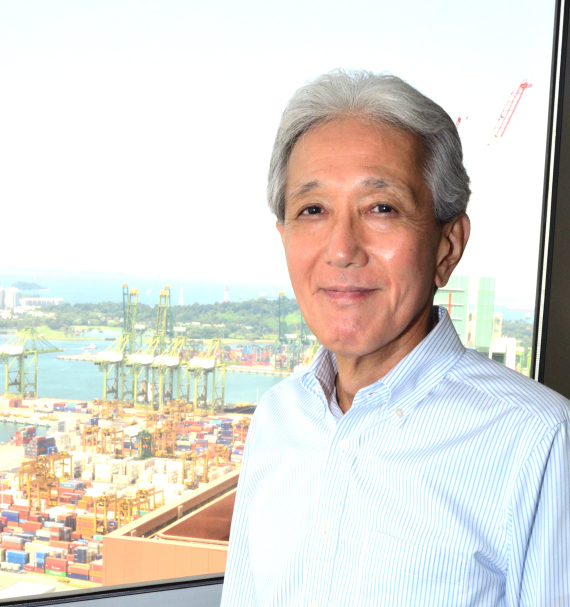 Uni-Asia Holdings Group Chairman and CEO, Michio Tanamoto (NextInsight file photo) Uni-Asia Holdings Group Chairman and CEO, Michio Tanamoto (NextInsight file photo) |
For Michio Tanamoto, a catastrophe often presents hidden opportunities.
In 1997, the onset of the Asian financial crisis became a stepping stone for the veteran banker to establish Singapore-listed Uni-Asia Holdings Ltd, a structured finance arrangement and alternative assets investment firm.
Nearly two decades ago, Hokkaido Takushoku Bank, which was overwhelmed by bad loans after the bursting of Japan' s real estate bubble, decided to shutter its overseas operations. Tanamoto, who spent 17 years of his career with the bank, and was then the deputy general manager of its Singapore branch, found himself in a pickle.
" I and three other colleagues decided to turn the situation to our advantage - we resigned from the bank to form a structured finance company providing syndicated loan facilities to clients in Taiwan, Hong Kong and China," the law graduate from Japan' s Hitotsubashi University recalled.
 &ldquo The bank' s failure became a negative example for us, and we wanted to ensure that the areas neglected by the bank - corporate governance, risk management and internal controls - would be our key priorities in running Uni-Asia.&rdquo &ldquo The bank' s failure became a negative example for us, and we wanted to ensure that the areas neglected by the bank - corporate governance, risk management and internal controls - would be our key priorities in running Uni-Asia.&rdquo
- Michio Tanamoto
Chairman and CEO
Uni-Asia Holdings Ltd
|
" With some Asian corporations - including Evergreen in Taiwan and Hopewell in Hong Kong - as our key shareholders, we began investing in Japanese properties and distressed assets, including non-performing loans from the Asian financial crisis."
Uni-Asia was established in March 1997, and Hokkaido Takushoku Bank eventually went bankrupt in November that year. " The bank' s failure became a negative example for us, and we wanted to ensure that the areas neglected by the bank - corporate governance, risk management and internal controls - would be our key priorities in running Uni-Asia," Tanamoto said.
Uni-Asia, which listed on the Mainboard of Singapore Exchange in August 2007, performs a variety of roles, including asset manager, finance arranger, ship owner, property broker, hotel operator and fund manager. The company acquires assets at competitive prices, as well as manages and operates these assets to enhance their value and generate recurring income.
Its four business segments are focused on ship owning and chartering, investment in and management of ships, ship finance and arrangement, investment in and management of properties in Japan, as well as hotel operations. These units generate five main income categories - charter income, fee income, investment returns, hotel income and interest income.
Tanamoto was appointed Chairman and Chief Executive Officer of Uni-Asia Holdings in April 2014.
|
Unique Value Proposition
Between the financial years ended 31 December 2011 and 2015, Uni-Asia averaged total income of US$70.8 million and net income of US$3.2 million. As at 30 June 2016, its assets were valued at US$341.1 million, up from US$314.2 million at end-2015. The stock has a market capitalisation of about S$47 million, and a book value per share of US$2.94.
In September, Tanamoto and Chief Operating Officer Masaki Fukumori both increased their shareholding in the company. Fukumori' s three purchases during the month amounted to over S$36,000, lifting his stake to 2.16% from 2.08%. Tanamoto spent about S$37,600 on two separate occasions to boost his shareholding to 2.21% from 2.14%.
" Our vision is to create unique offerings for our clients - we want to be a comprehensive provider of alternative asset investment opportunities and related services," Tanamoto said.
" So far, we' re the only player in the market that invests in and provides integrated services for both ships and properties."
Through its shipping unit and joint-venture firms, Uni-Asia owns a portfolio of 20 vessels, comprising 15 bulk carriers, four containerships and one product tanker. With an average age of less than five years, these ships have a higher reliability and greater fuel efficiency. Another four vessels will be delivered from 2018 onwards.
" By purchasing through joint-investment companies, and with delivery from 2018 onwards, we can limit our capital outlay and are well-positioned to benefit from the industry' s future recovery," he noted.
" Most of our acquisition costs are competitive, with breakeven levels that are below that of our peers. Even if the market rebounds slightly, it will flow through to our bottom line."
 Most of our acquisition costs are competitive, with breakeven levels that are below that of our peers. Even if the market rebounds slightly, it will flow through to our bottom line. Most of our acquisition costs are competitive, with breakeven levels that are below that of our peers. Even if the market rebounds slightly, it will flow through to our bottom line.
- Michio Tanamoto
Chairman and CEO
Uni-Asia Holdings
|
With about 70% of its assets in ships, Uni-Asia' s fortunes are entwined with the shipping market. This industry, and in particular, the dry bulk segment, is in its worst shape in three decades.
But Tanamoto believes the sector could start bottoming out next year, although a large gap will continue to exist between demand and supply.
" According to Clarkson order book data, deliveries for bulk carriers in 2017 are expected to fall sharply - by about 50% from a year ago - and the increase in total tonnage continues to slow significantly," he added.
" While we won' t see a full-fledged recovery for another few years, there should be some definite signs of improvement next year."
| &diams Double-Edged Sword |
|
Many valuable lessons, however, can be gleaned during these tumultuous times, Tanamoto noted.
" A downturn is a double-edged sword. It can either be the worst of times in terms of survival, or the best of times, where we build on our fundamentals and strengthen our capabilities," he added.
" We will dig in our heels and prevent this downturn from disrupting our growth plans."
Meanwhile, Uni-Asia has a buffer. Its hotel operations, as well as residential and commercial property businesses, are picking up the slack.
" The shipping and property markets are historically not correlated, and usually move in opposite directions. Investing in these two different segments has provided us some cushion for our bottom line as well as cashflows," Tanamoto noted.
Uni-Asia
|
Stock Price
|
S$1.01
|
Market Cap
|
S$47.45m
|
52-week High Low
|
99c-$1.35
|
Dividend Yield
|
5.95%
|
Price/Book
|
0.252x
|
Source: SGX StockFacts
(data as of 23 Nov 2016)
|
Uni-Asia' s focus on developing small residential property projects also provides a competitive edge. These projects comprise four- to five-storey buildings with between 10 and 30 units of studio or maisonette-style apartments called Alero, located in metropolitan Tokyo.
" We' re the unique developer focusing on this niche market, which is popular with Japanese working singles or couples," Tanamoto noted.
" These properties are also in big demand by high net-worth investors in Japan. To avoid hefty domestic inheritance taxes, many of these high net-worth individuals prefer to channel their cash into such physical assets."
Uni-Asia' s hotel operations, occupancy and daily room rates have also remained robust. It is now managing 10 hotels in Japan, and plans to add another six in the major cities of Tokyo, Yokohama, Nagoya, Kyoto, Hiroshima and Kanazawa. This will bring the total number of rooms close to 3,000.
" Our brand name is gaining traction and is well-received by corporates and businessmen, largely because of the unique configuration of space within the rooms," Tanamoto added.
|
Failures & Challenges
Over in Hong Kong, Uni-Asia, as part of a consortium led by First Group Holdings Ltd, clinched its third commercial property project in July. This involves the construction of an office building scheduled for completion in 2019.
" We' re focused on commercial projects in Hong Kong because of the limited supply of land for office buildings in the territory," Tanamoto said.
" Due to the Hong Kong government' s tight control over supply, this segment of the market has been very stable, and such projects offer good capital appreciation, even though competition is extremely stiff."
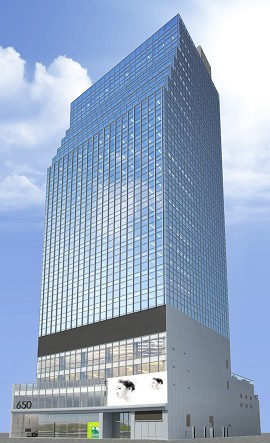
Uni-Asia' s 2nd property development in Hong Kong is a commercial office building at 650 Cheung Sha Wan Road that is expected to be completed by 2017.
(Artist' s impression)
Looking back on the last 20 years, Tanamoto acknowledges Uni-Asia has made reasonable, even satisfactory progress. His passion, he says, is developing the business and rewarding clients and shareholders.
" My biggest worry is how to manoeuvre this market with all its challenges. We have a responsibility to staff and shareholders to run this business well, and these are some of the issues that weigh on my mind," he said.
Nevertheless, the 59-year-old, who enjoys golfing and reading historical non-fiction, remains steadfastly focused on taking Uni-Asia to the next level.
" People normally run from failures, but I prefer not to. We' ve not always been successful in our investment decisions, and I always remember the failures and mistakes of the past," said the father of a son, 24, and a daughter, 26, who are both studying in Tokyo.
" I think about how I might have done things differently, and I make sure I use those lessons and experiences to manage the next challenge or opportunity that arises."
Financial results
Year ended 31 Dec
(US$ ' 000) |
FY2015 |
FY2014 |
FY2013 |
FY2012 |
| Total income |
77,052 |
67,134 |
73,878 |
78,284 |
| Operating profit |
8,907 |
5,612 |
10,541 |
6,316 |
| Attributable net profit |
3,520 |
2,108 |
5,641 |
3,597 |
Quarter ended 30 Sep
(US$ ' 000) |
3Q2016 |
3Q2015 |
YoY Change |
| Total income |
22,956 |
17,982 |
28% |
| Operating profit |
911 |
173 |
427% |
| Attributable net profit |
-777 |
-1,304 |
N.A. |
Source: Company data
|
Outlook |
|
 The current uncertainty in the global economy has posed many challenges to various business sectors, especially the shipping industry. In addition, the oversupply of vessels could prolong the depression in the shipping market. The current uncertainty in the global economy has posed many challenges to various business sectors, especially the shipping industry. In addition, the oversupply of vessels could prolong the depression in the shipping market.- Uni-Asia' s core resilience lies in its diversified business model, which allows it to explore various opportunities in different sectors, and helps stabilise the overall performance of the Group.
- In this regard, barring any unforeseen circumstances, the Group' s investments in property and its hotel operating business are expected to mitigate the negative impact of the shipping market on the Group' s performance.
|
Uni-Asia Holdings Ltd
Uni-Asia Holdings Ltd is an alternative investment company performing a variety of roles that include asset owner and manager, operator, co-investor, ship finance arranger, broker and fund manager. Its investments are focused on cargo vessels and properties in Hong Kong, Japan and China. To improve investment returns, Uni-Asia also provides integrated services for the invested assets, including acting as operator for commercial maritime vessels and invested properties, which are in commercial, residential and hotel segments. Listed on Singapore Exchange in 2007, Uni-Asia strives to achieve sustainable growth through a prudent approach. Their offices are located in Hong Kong, Singapore, Tokyo, Taiwan, China and South Korea.
The company website is: www.uni-asia.com
Click here for the company' s StockFacts page.
For its third quarter results ended 30 Sep 2016, click here.
http://www.nextinsight.net/story-archive-mainmenu-60/938-2016/11156-uni-asia-carves-niche-in-alternate-asset-investments
Uni Asia just announced its 3Q 2016 results.
Press release:-
http://uniasia.listedcompany.com/newsroom/20161114_171000_AYF_HZ0JIG5HQT9QY64S.3.pdf
Presentation:-
http://uniasia.listedcompany.com/newsroom/20161114_171000_AYF_HZ0JIG5HQT9QY64S.2.pdf
Financials:-
http://uniasia.listedcompany.com/newsroom/20161114_171000_AYF_HZ0JIG5HQT9QY64S.1.pdf
NAV per share at US$3.01
Uni-Asia reported lower profits for 9M2016 due to weak shipping market
- Charter income increased by 12% to US$25.2 million for 9M2016 as fleet size increased
- Hotel income increased by 23% to US$30.4 million for 9M2016, supported by healthy occupancy and daily room rates
- Higher depreciation and amortization and higher vessel operating expense weighed on bottom line
- The Group&rsquo s investments in property and its hotel operating business mitigated the negative impact of the shipping market conditions on the Group&rsquo s performance - The Group was awarded runner up of the SIAS Investors&rsquo Choice Awards
&ndash Most Transparent Company Award 2016 for the second year in a row Singapore, 14 November 2016
&ndash Uni-Asia Holdings Limited (&ldquo Uni-Asia&rdquo or the &ldquo Group&rdquo ), an alternative investment company and integrated service provider of vessels and properties, announced a net profit of US$0.5 million for the nine months ended 30 September 2016 (&ldquo 9M2016&rdquo ).
Total Income Composition
Total income for the Group increased 15% to US$64.5 million for 9M2016 compared to US$56.0 million for 9M2015.
Charter income increased by 12% to $25.2 million in 9M2016 from $22.5 million in 9M2015. There were 9 vessels in Uni-Asia Shipping&rsquo s portfolio compared to 8 for 9M2015. Further, a dry bulk carrier acquired by the Group in end March 2016 also contributed to the increase in charter income. The increase is in line with the Group&rsquo s strategy to build up recurring charter income.
Total fee income decreased by 6% from $5.4 million in 9M2015 to $5.1 million in 9M2016. Fewer ad hoc arrangement and brokerage transactions in 9M2016 resulted in lower arrangement and agency fees as well as brokerage commission fee.
In 3Q2016, the Group earned incentive fee of $0.5 million from joint investment small residential property projects upon disposal of the investments and exceeding investment targets. Incentive fee income was $0.8 million in 9M2016.
Hotel Income increased by 23% to $30.4 million in 9M2016 from $24.7million in 9M2015 due mainly to an improvement in average daily rates with occupancy rates remaining strong. There was also a new hotel under operations from 2Q2016.
Investment returns for 9M2016 was $1.4 million, with net investment loss of $0.2 million for 3Q2016. In 3Q2016, 2 units of the office investment properties in Guangzhou, China were disposed, resulting in a realised gain on investment properties of $0.41 million and a corresponding reversal of previously-recognised fair value gain of $0.46 million. In addition, the company recognised $2.8 million realised gain on small residential property development projects, and a corresponding reversal of previously-recognised fair value gain of $2.1 million. The company also recognised fair value losses of $1.4 million for shipping investments in 3Q2016 due to the continued weak shipping market.
Total operating expenses for the Group increased 21% from $49.1 million in 9M2015 to $59.4 million in 9M2016. Amortisation and Depreciation, and Vessel Operating Expenses increased due to new vessels delivered/acquired. Hotel Lease Expenses and Hotel Operating Expenses increased due to increase in expenses corresponding with an increase in hotel income as well as increase in hotels under operations.
The Group posted a net profit of $0.5 million for 9M2016 compared to a net profit of $3.0 million for 9M2015. As at 30 September 2016, the Group had a net asset value per share of 3.01 US cents, compared to 2.98 US cents as at 31 December 2015.
OUTLOOK
The current uncertainties in the global economy have presented many challenges to various business sectors, especially to the shipping sector. The depressed shipping market has continued to affect the Group&rsquo s financial performance and such market conditions are expected to persist into 4Q2016 and possibly FY2017. The Group will continue its focus on pursuing its long term strategy of utilising its expertise of a diversified business model which includes property investment and hotel operations, as well as cautious capital management, to ensure a steady and sustainable development of its businesses.
--- The End ---
About Uni-Asia Holdings Limited. (Bloomberg Code: UNIAF SP) Uni-Asia Holdings Ltd is an alternative investment company performing a variety of roles such as asset owner and manager, operator, co-investor, ship finance arranger, broker and fund manager. Uni-Asia&rsquo s investments are focused on cargo vessels and properties in Hong Kong, Japan and China. To improve investment returns, Uni-Asia also provides integrated services for the invested assets, including acting as operator for commercial maritime vessels and invested properties which encompasses commercial, residential and hotel properties.
Listed on the Main Board of the Singapore Exchange in August 2007, Uni-Asia strives to achieve a sustainable growth through a prudent approach. Their offices are located in Hong Kong, Singapore, Tokyo, Taiwan, China and South Korea.
For more information, please visit the corporate website at www.uni-asia.com
http://uniasia.listedcompany.com/newsroom/20161114_171000_AYF_HZ0JIG5HQT9QY64S.3.pdf
Low liquidity. Buy later hard to sell
Baltic dry index is up 30% this year. Possible to hoot this counter?
Was reading Uni Asia 2015 Annual Report and noted the followings:-
Maritime
Owns 14 vessels with 5 vessels under construction. Maritime remains the segment with most assets of Uni Asia at 71.5% (2014: 64.7%).
Ship chartering profitability in PBT have decreased significantly with FY15 PBT at US$0.623m (2014: US$2.299m). Unsure about the remaining charter periods and if Uni Asia have any ways to mitigate the falling shipping charter rates?
Hotels
Operates 8 hotels under " Hotel Vista" brand & 1 under " JAL City Naha" .
Not sure if Uni Asia is the appointed operator of these assets or if Uni Asia owns equity interests in these hotels.
1 hotel in Sendai opening soon with 2 under construction and expected to open in 2017.
Major shareholders being:-
Yamasa 33.46%
Evergreen 9.98%
NAV per share @ US$2.98 (approx S$4.00)
EPS @ 5.74 cents (US), approx 7.75 cents (SG)
Dividend @ 6.25 cents (SG)
Assuming share price at S$1.20, PE @ 15.5 x and dividend yield @ 5.2%
Assess fully valued as the maritime or shipping outlook is still gloomy and strong headwinds which may affects profitability going forward.
How is e result for Uni Asia ? Will it fly Tmr ?
Anyone got buy unit Asia , this gem having hotel chain at Japan may be same time purchase the hotel as IPC , so if they unloaded the value to shareholder will be next multi begged gem. Time to accumulate now
